A selection of a few adventures and days out around Devon and beyond.
Bovey Valley Woods Circular Walk
This 3.6mi/5.7km circular walk starts at the free Pullabrook car park (what3words: ///host.retract.condense) and takes you through woodland, heathland and along the River Bovey. There is so much wildlife and nature on this walk, passing two bird hides, moss covered trees, the lichen trail and so many species of fungi. There are some inclines with uneven terrain in places, so sturdy footwear is advised. There are toilets halfway along the walk at the Natural England Offices (Yarner Wood), but no refreshment stops on the route. There is a cafe at National Trust Parke (7 minute drive), as well as Ullacombe Farm Cafe & Shop (6 minute drive). Lustleigh is the nearest village (5 minute drive) which has a pub and cafe. There are also picnic benches in Yarner Wood by the National England Offices car park.
Arriving at the River Bovey
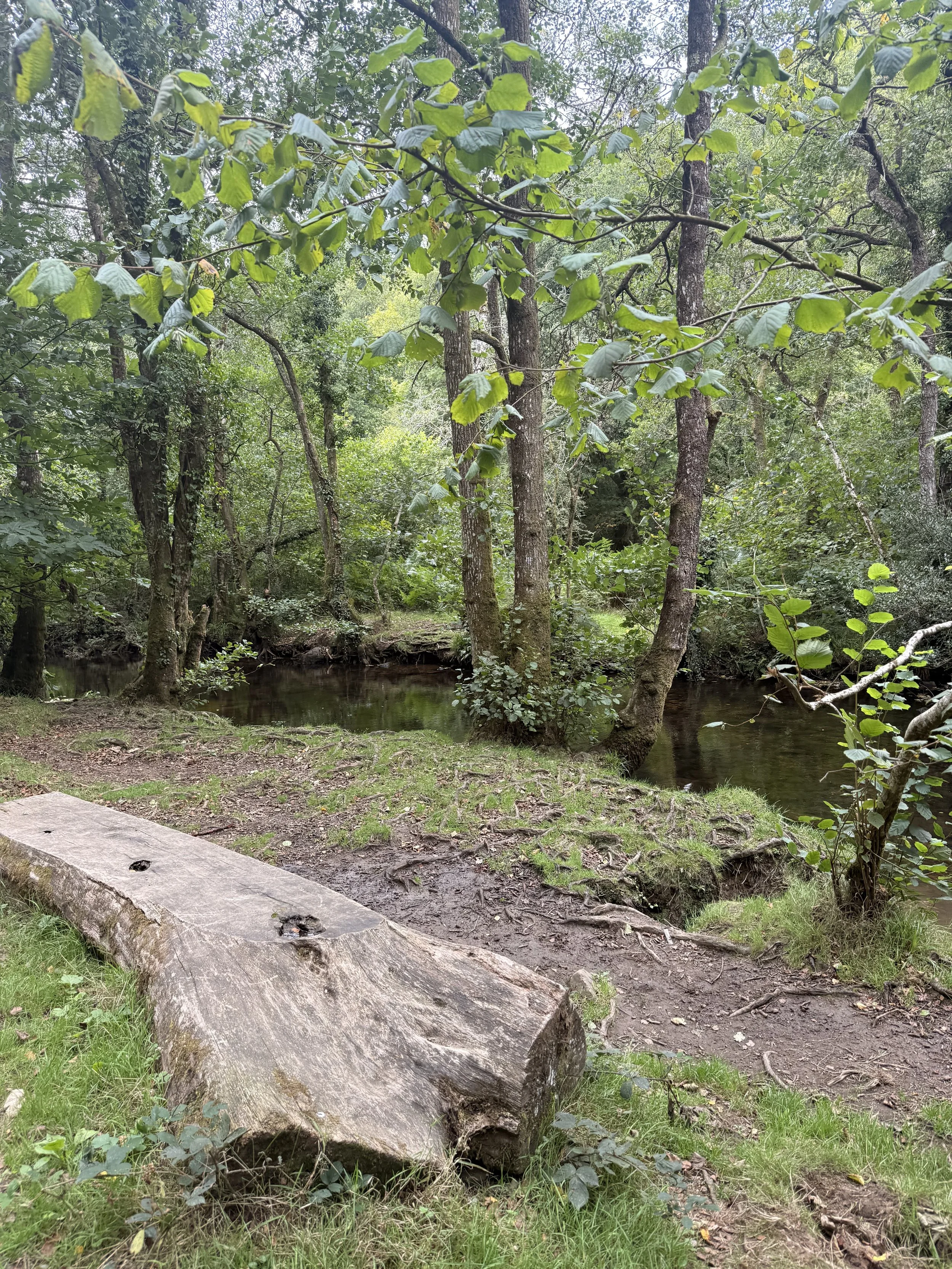
The first views of River Bovey
From the car park, follow the main track through the gate, passing some timber stacks. Take a minor path on your right before the second lot of timber stacks where you’ll pass several trees in the woods with bat boxes attached. You’ll first hear the River Bovey on your right, then as you pass though a gate, the river will be in sight on your right. Continue along this path, walking alongside the river on your right. Keep an eye out for grey wagtails and dippers in the river, especially any rocks they may perch on in the middle of the water. When you arrive at a gate in front of you, ignore this and continue to the right where you’ll soon pass over a stile and into some woodland. Here we heard long tailed tits calling out continuously and goldcrests squealing as we took the trodden path up the hill. Be careful of rocks and tree roots as you walk to the top, then turn right, taking a narrow path until it reaches a lane.
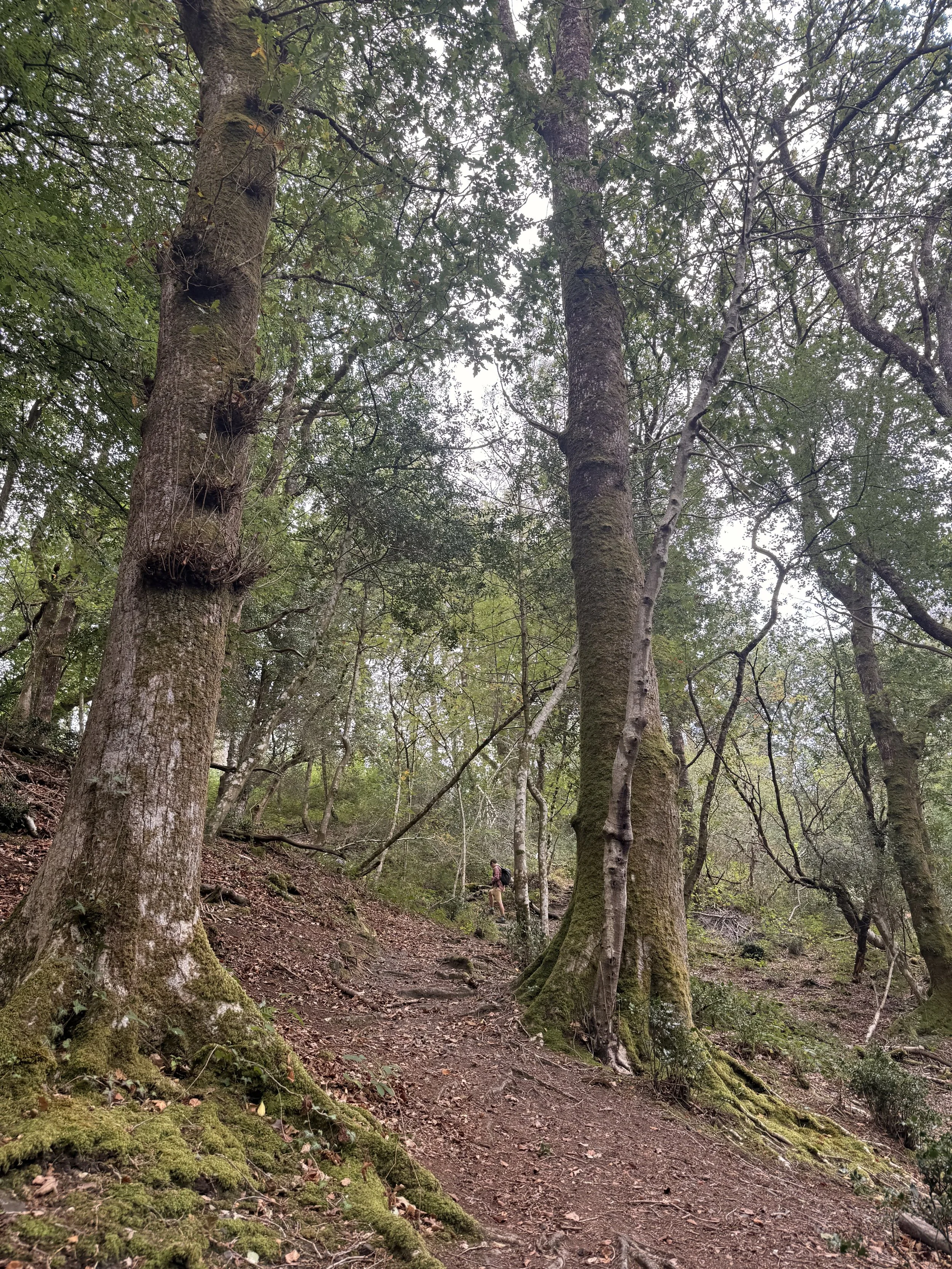
Walking up the hill in the wooded area
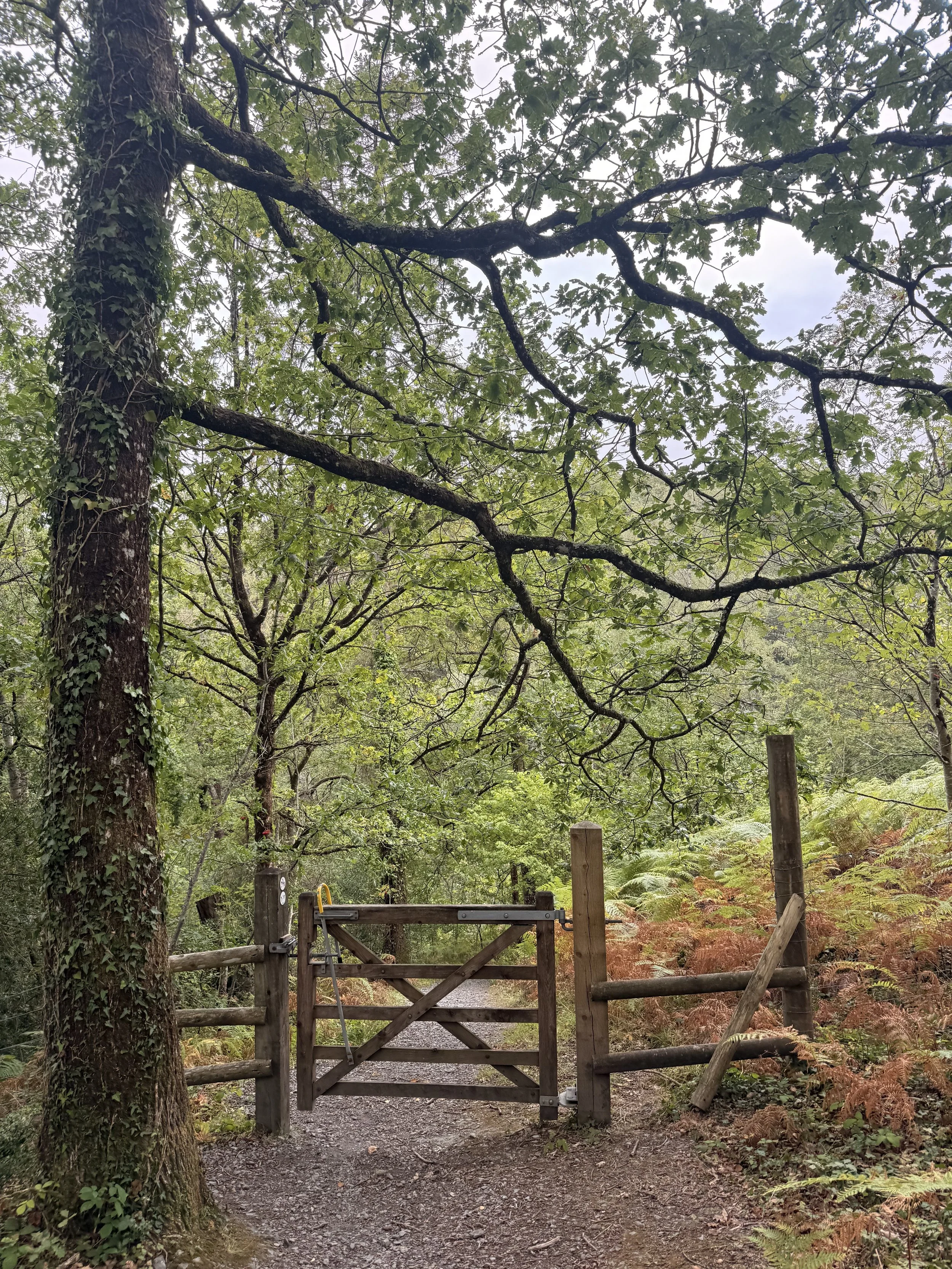
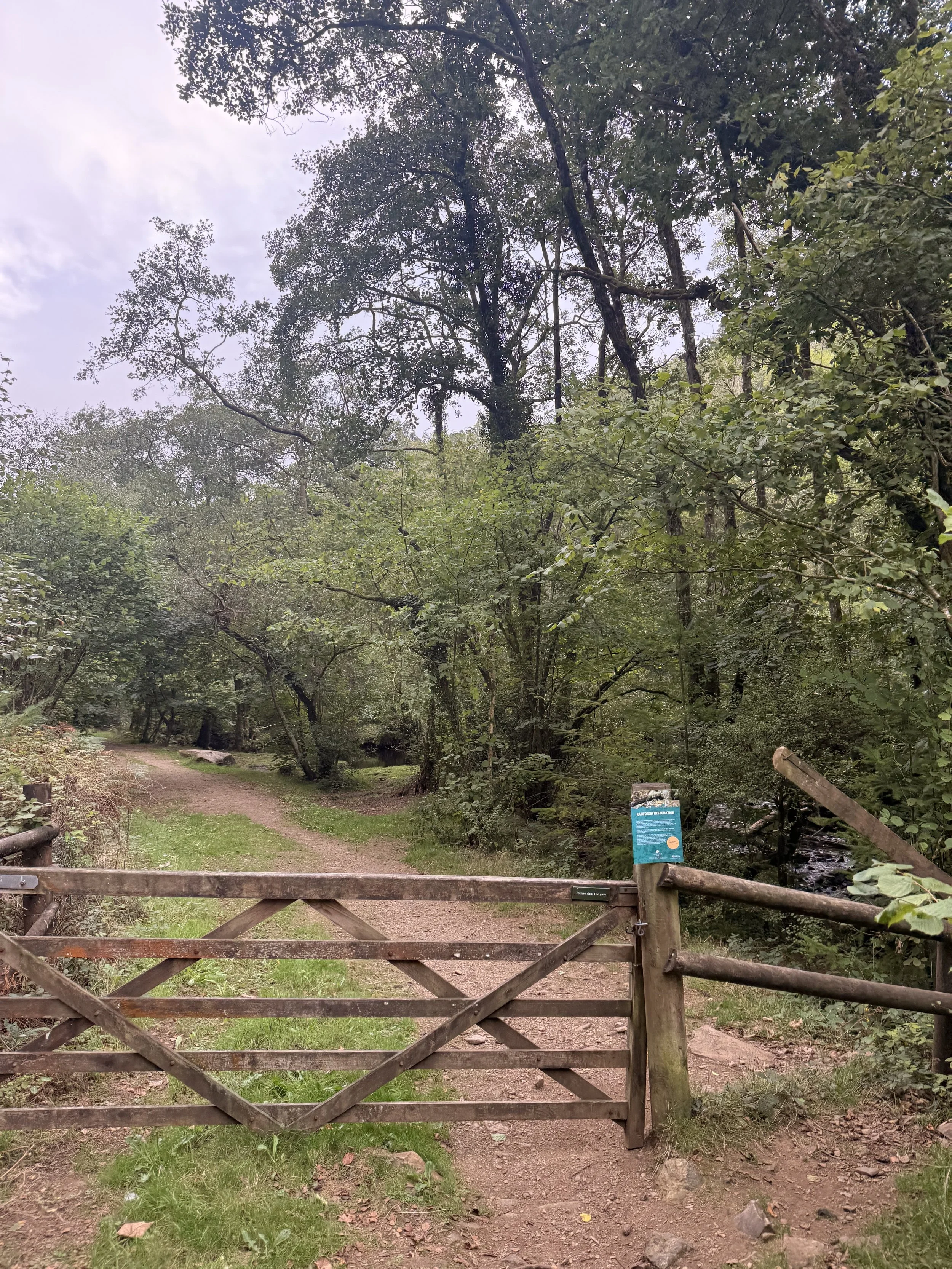
The gate leading to East Dartmoor Nature Reserve
Turn left up this lane that’s decorated with moss covered trees, stones and beautiful ferns as the path soon turns into a gravel track. When you arrive at a rocky path on the right, take this route between the ferns which will soon open up into a car park. From here, exit the car park on the right, walking a short distance up the road until you pick up a track on the other side of the road (by a bus stop with a bench). Take the bridleway to the left of the locked gates, then ahead of you, pass through the gate signposted as Yarner Wood (there’s a sign here stating that dogs need to be on leads). We heard and saw a group of meadow pipits here as we turned right at the end of this path, and on the damp September day we did this walk grasshoppers were still hopping around on the ground. Passing a gate on your right, take the path ahead of you, then turn left down a stony track with tree roots underfoot. We saw an impressive wood ant nest on the left here as we walked down the hill. The views ahead and to the right of the trees in the valley were beautiful as we turned right at the end of the track, then through a gate which leads into a car park.
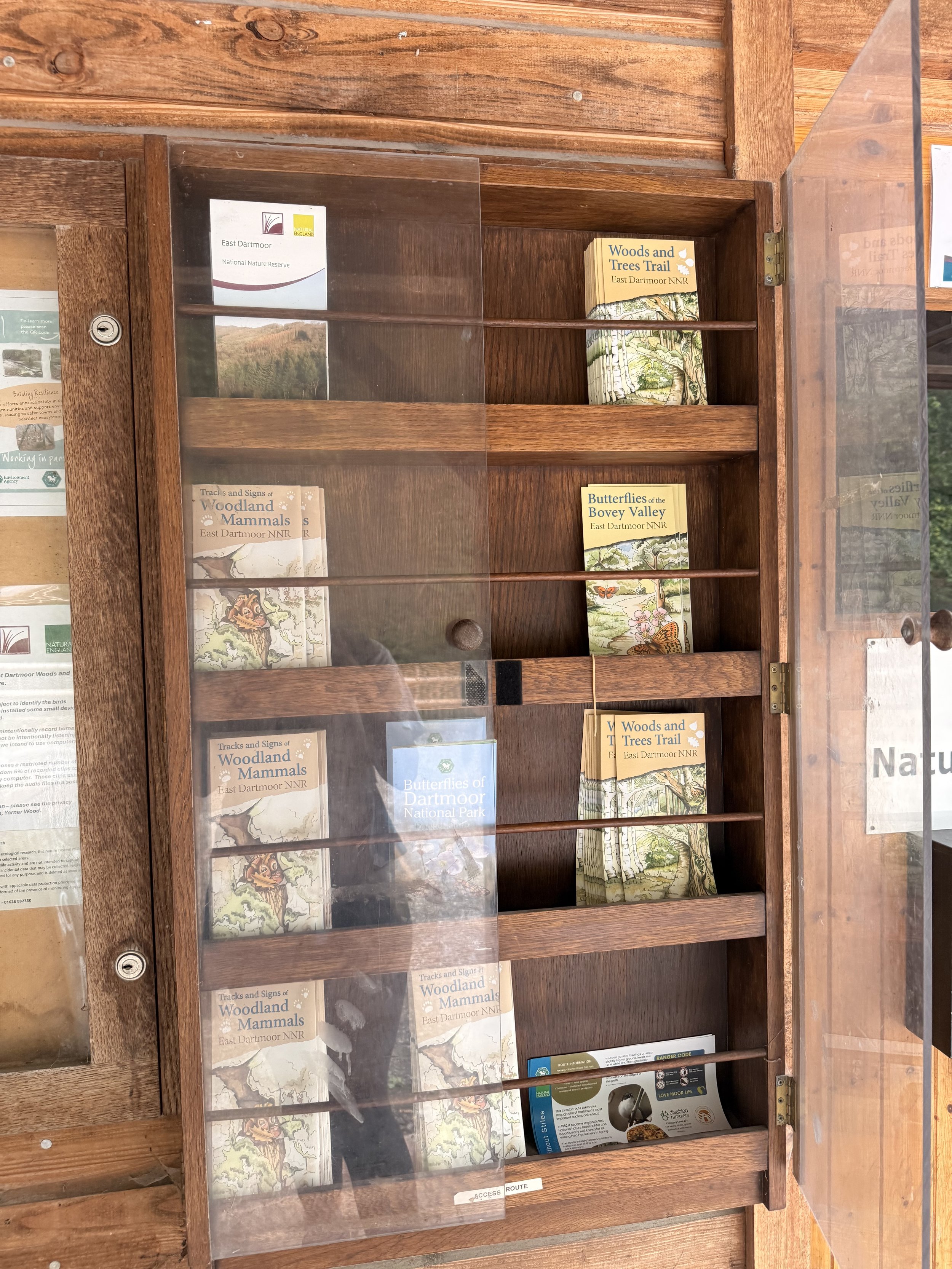
Plenty of leaflets of the local nature and wildlife
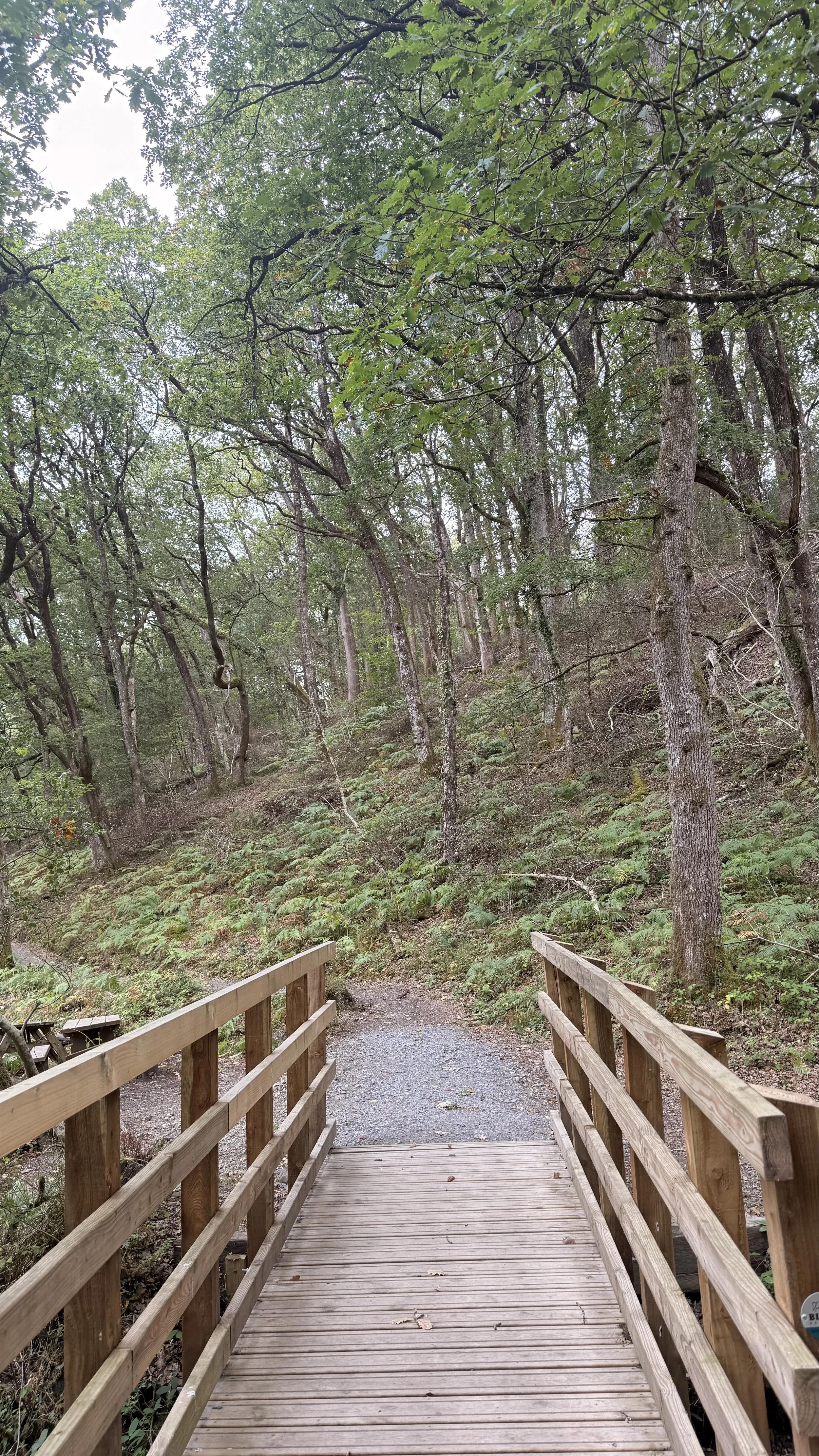
Crossing the bridge by the picnic benches
There are toilets here in this car park by the National England Offices, as well as some information leaflets on the local wildlife and nature you may encounter. After picking up a couple of leaflets we left the car park through a gate opposite the offices, then crossed over a wooden bridge. We walked the gravel path, passing picnic benches on our left by a stream, then at the end of the path, turned right, passing moss covered trees up the hill. We could hear several jays calling out in the trees here, a busy time of year for them at the moment, collecting and caching acorns to store and eat over winter. At the top of the lane, we stopped off at the bird hide before taking the track on the right hand side. When you get to a fork in the path, take the track to the right; we saw a group of chaffinches foraging on the path here as we walked under the canopy of trees. Keep an eye out for lichen and moss on the stone walls and tree roots along this track too. Turn right down a path with a post beside it which will take you down some steps then across two wooden bridges. We then turned left at the end of this path, then right, up a hill and through a gate, then taking a path to the left. (We then took a detour to the path straight ahead by the metal railings which took us to a bird hide overlooking a beautiful reservoir). Once arriving at an information sign, we took a path on the right and passed through a gate, crossing a road and entering into a car park. We picked up a grass path straight ahead in the car park, which took us right, down the hill, boasting lovely views of the valley and trees, it was lightly raining at this point, which seemed to make the landscape even more beautiful. Ignore the first left turn, instead take the second left and continue on a rocky path down the hill.
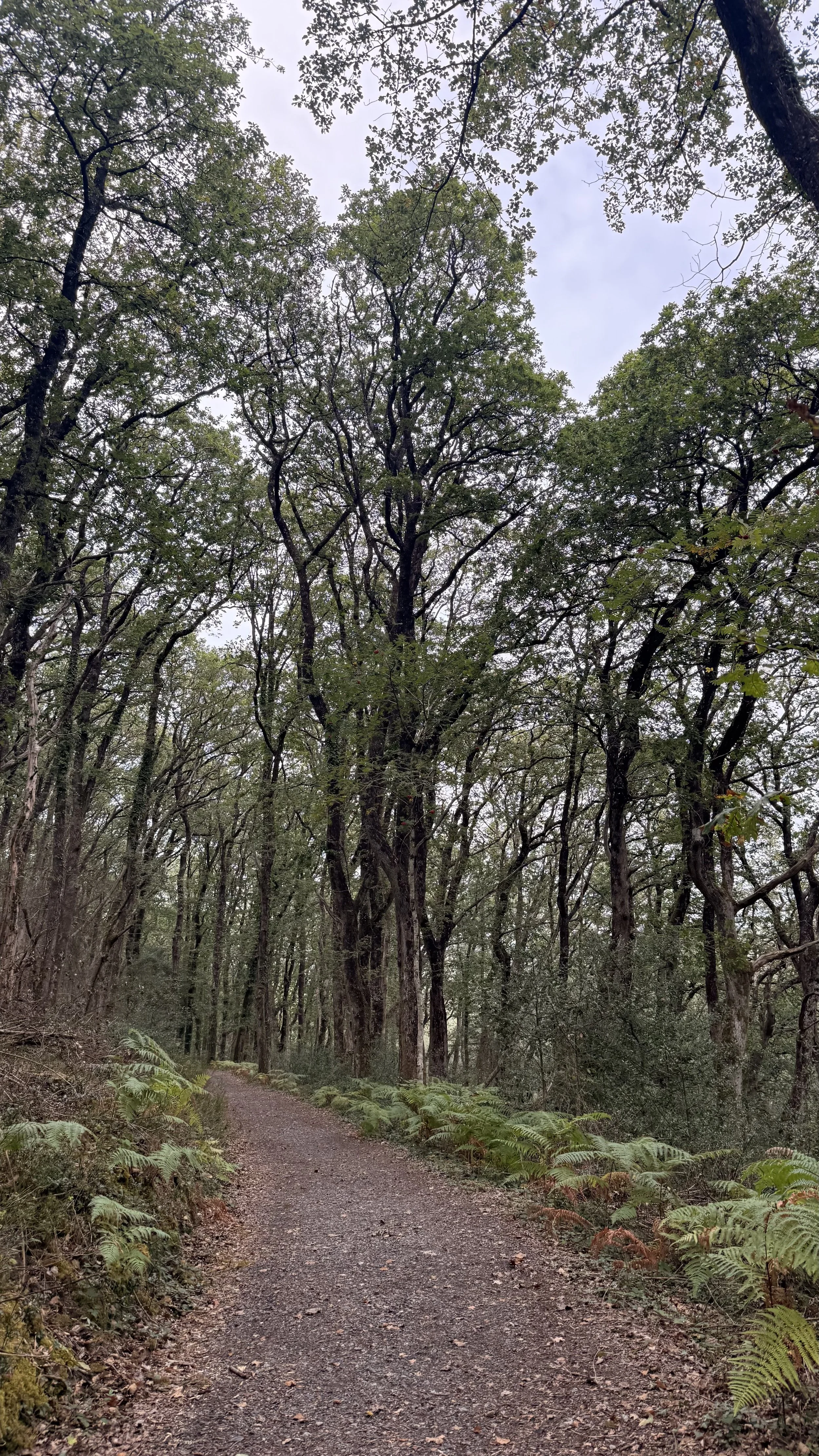
So much moss and lichen on the trees and stone wall in this area
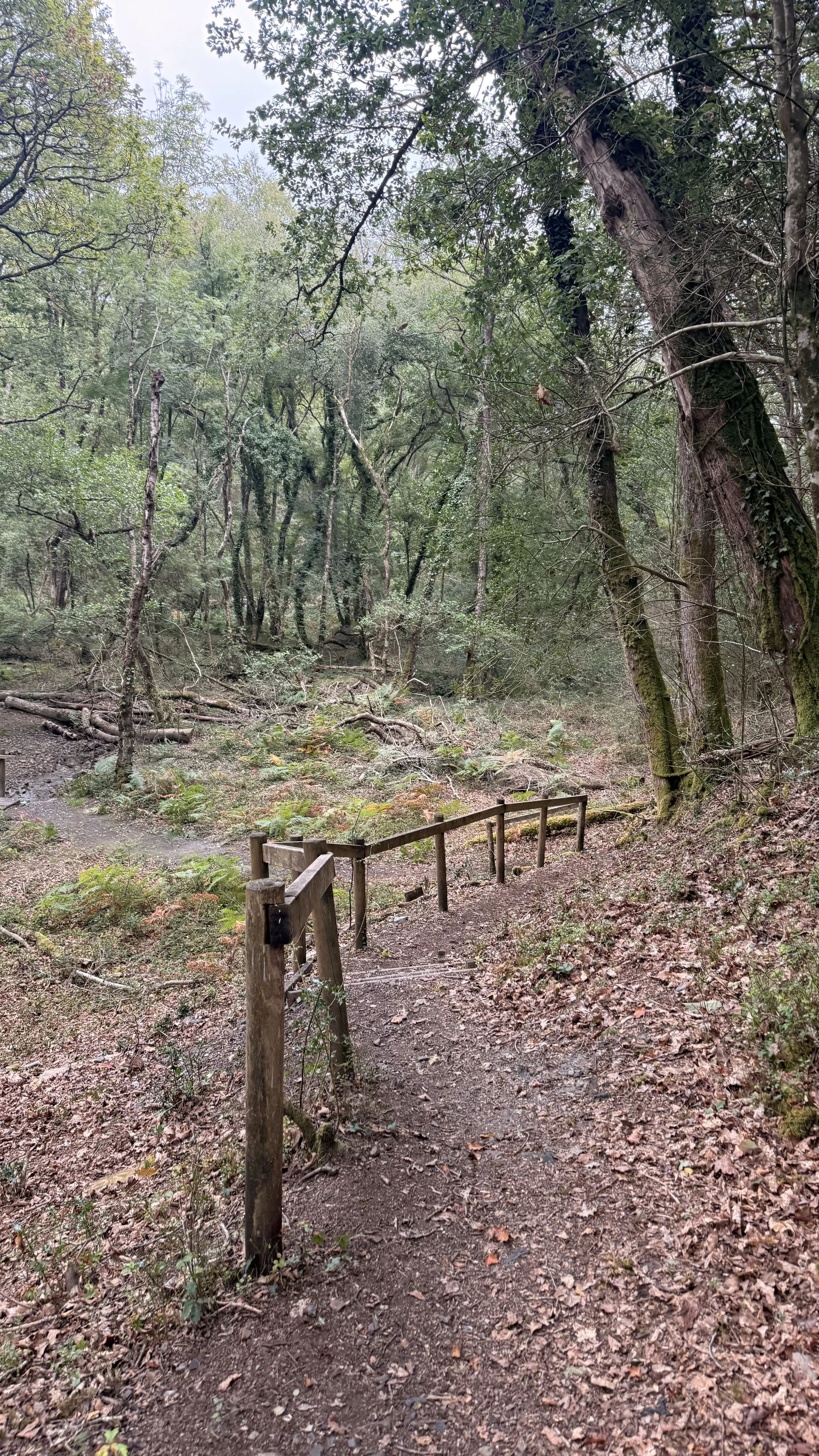
Walking the path towards the two wooden bridges
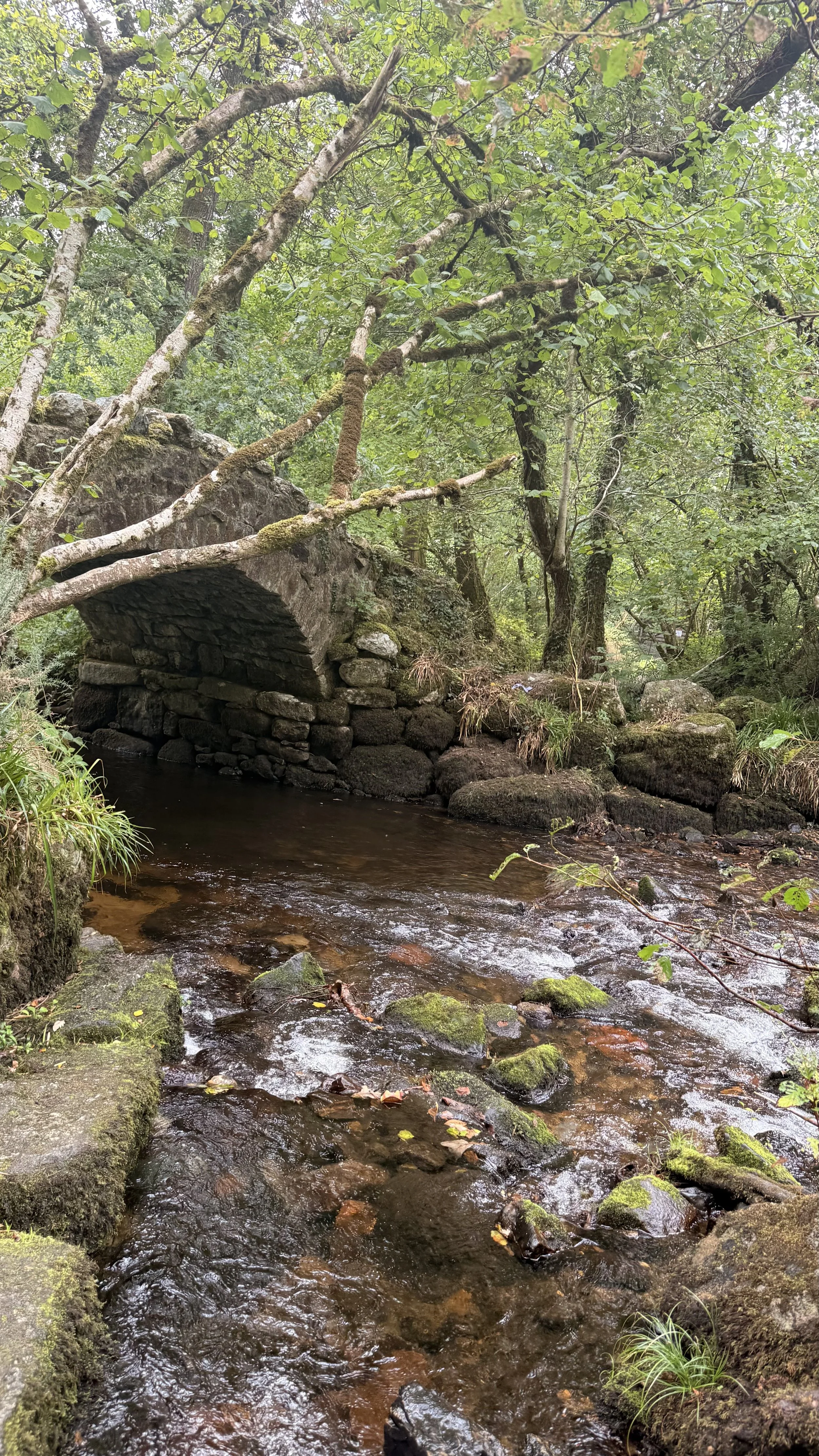
When you arrive at the bottom of the path, you should notice you’ve been on this track before. Turn left down the hill and keep an eye out for different fungi along this route, there will be a lot more popping up soon, now we’re entering into the damp autumnal days. When you pass a boulder, turn right through a gate where you’ll arrive at Hisley Bridge, a beautiful old stone packhorse bridge. After crossing over the bridge, turn right where you’ll soon pass through a gate and onto a gravel track, we saw a dipper perched on a rock in the river, so keep an eye out as you walk this path alongside the water. When you pass a sign saying ‘Hisley Woods’, take the path to the right, keeping to the riverside walk.
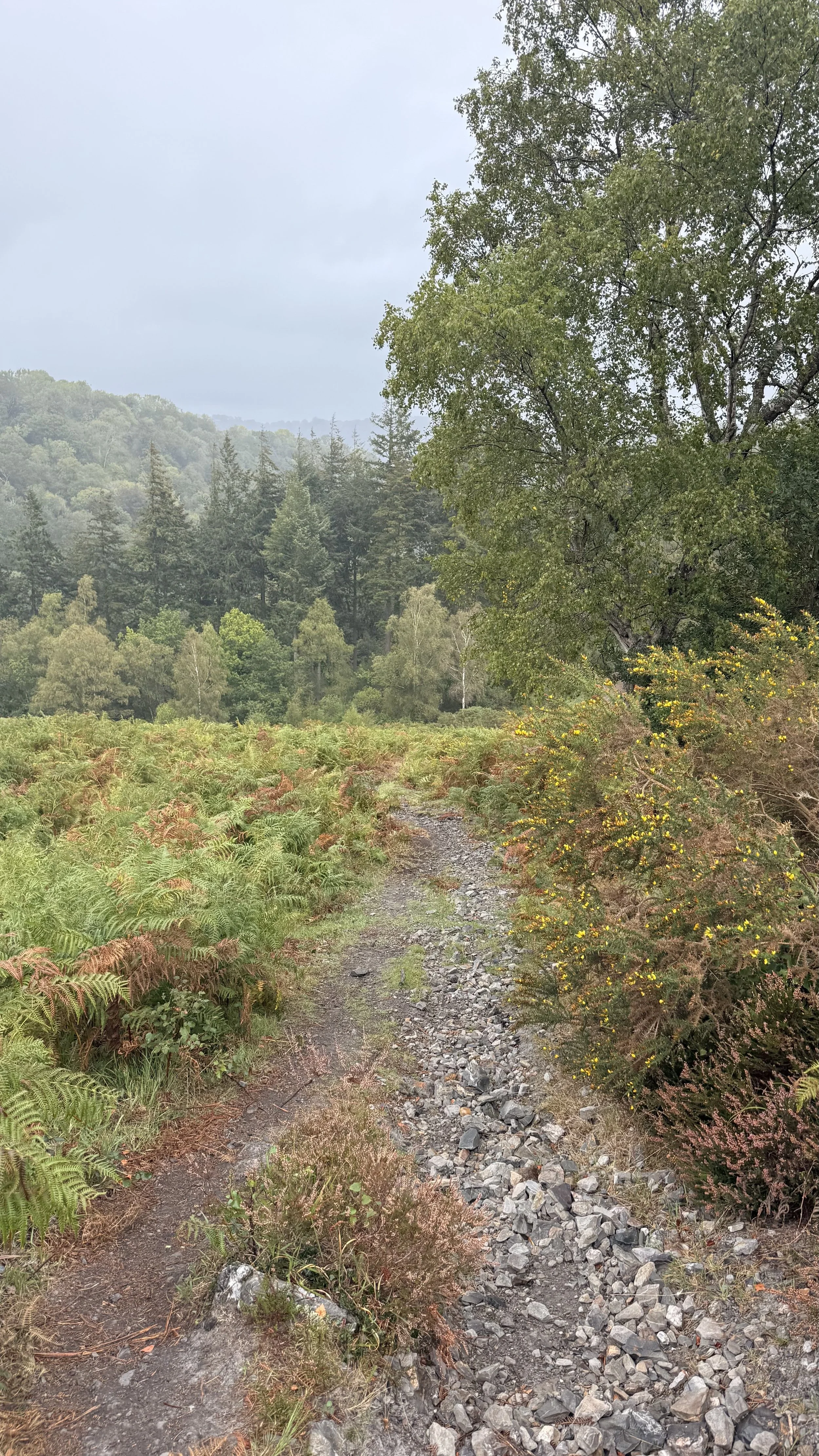
Beautiful views in the rain
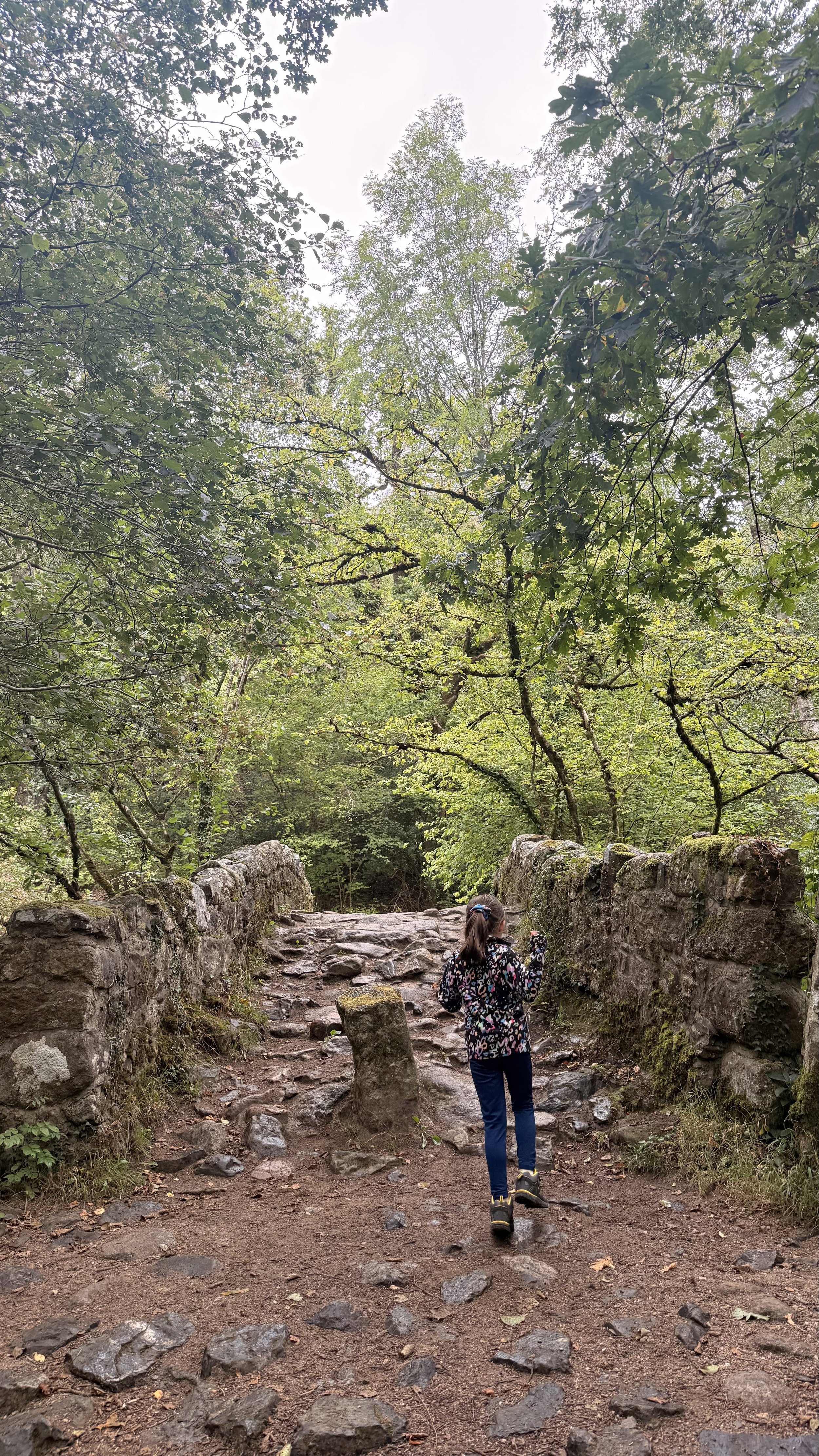
Crossing over Hisley Bridge
Eventually you’ll pass through a gate into a field with the river still on your right. Follow the trodden path that takes you to a metal gate to the left. After passing through the gate, we noticed some broken snail shells on the stone wall to the right, signs that a song thrush has most probably used the stone as an anvil to get to the snail inside. We turned right and walked down the lane then right again at the end, where soon you’ll pass over a stone road bridge and arrive back at the car park on your right. This is one of many beautiful walks Dartmoor has to offer. I’ll be posting more on here soon to enjoy, so be sure to keep an eye out for them.
Hisley Bridge, the old stone packhorse bridge
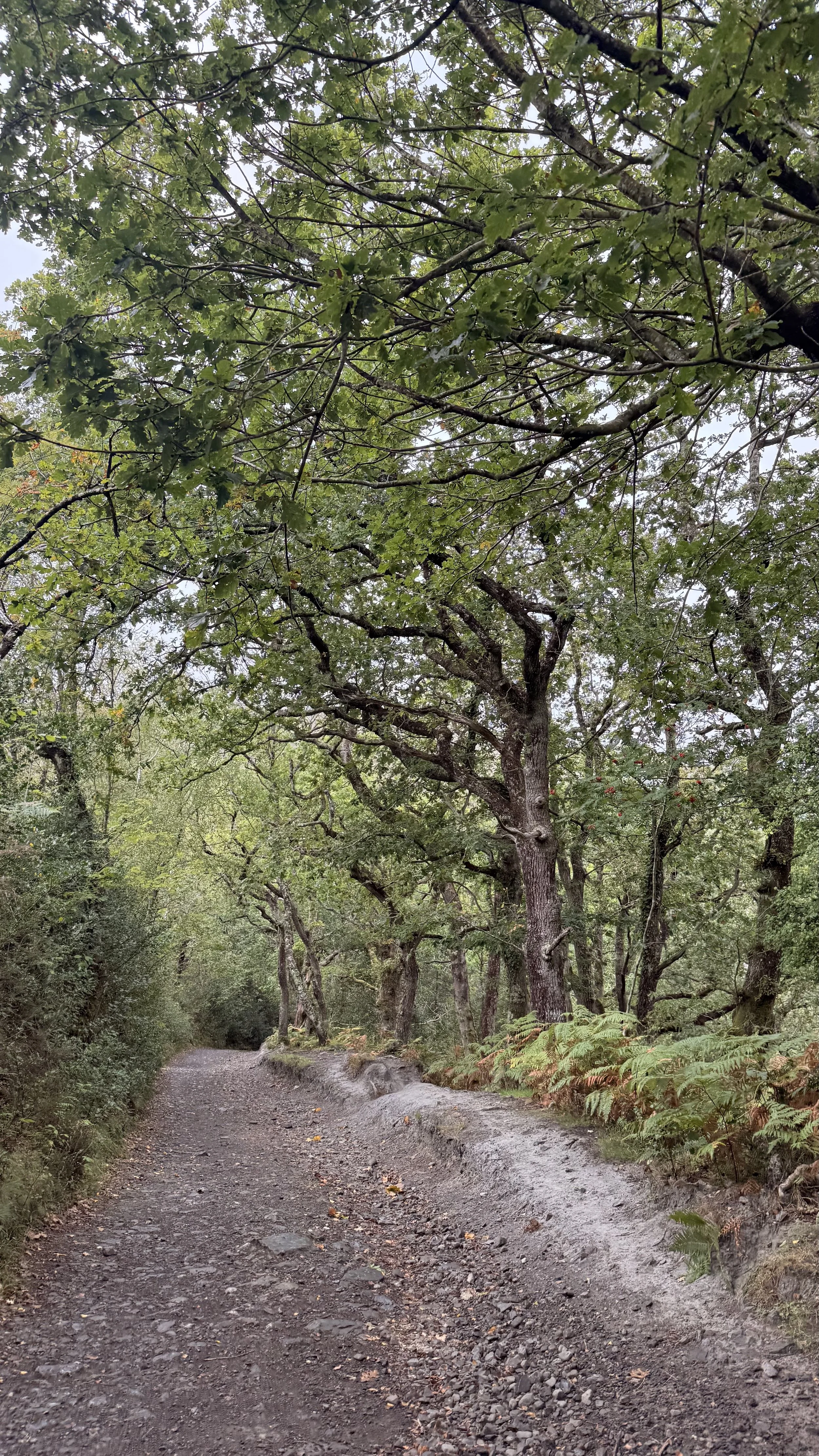
One of the tracks sheltered by trees
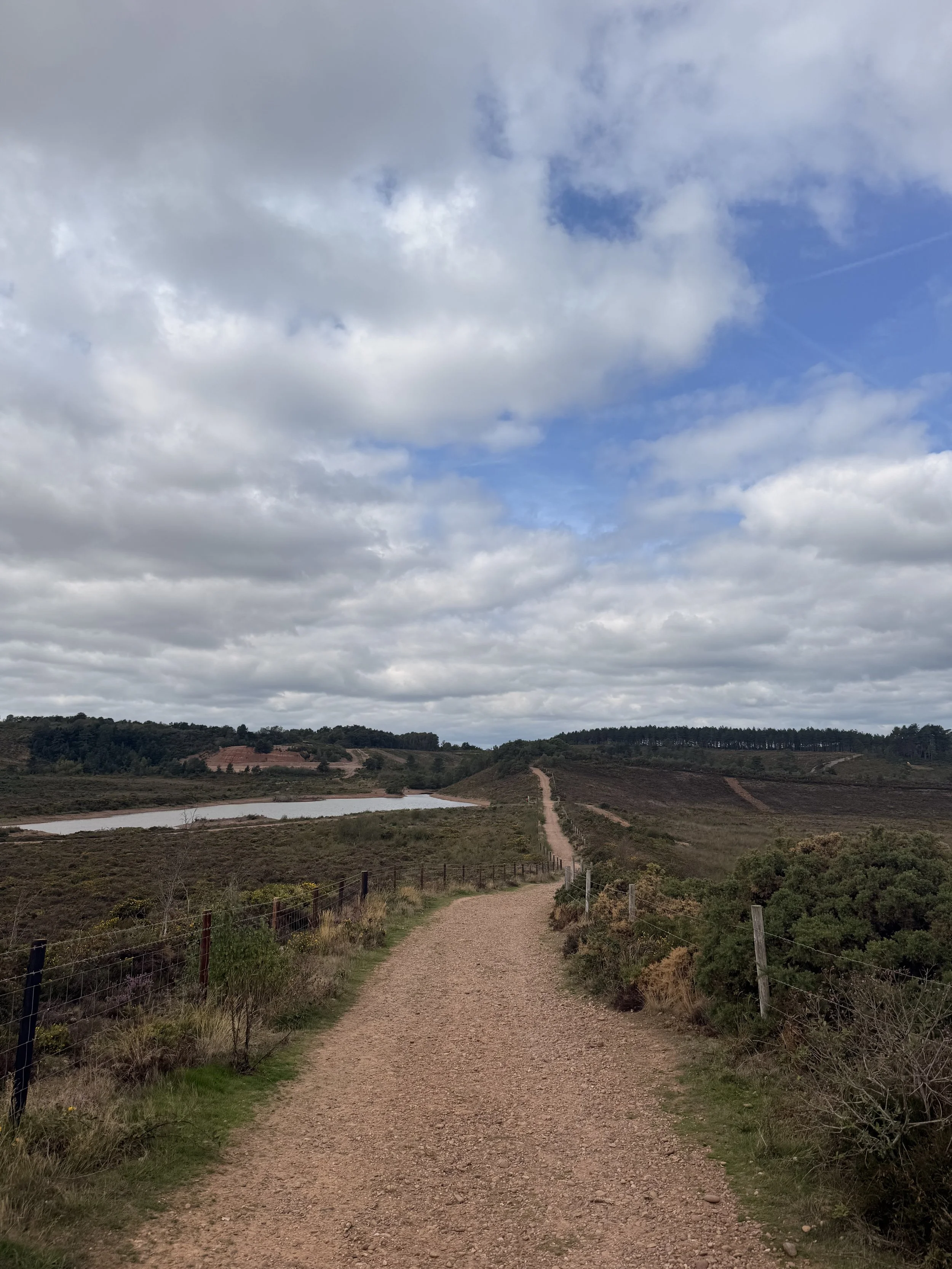
Bicton Common Circular Walk
This 3.3mi/5.3km walk on the Pebblebed Heaths starts and ends in Four Firs free car park (what3words: ///leathers.taller.ruling). It takes you over the heaths, along rugged tracks, through woodland, over a stream and alongside an old quarry. Sturdy footwear is definitely advised for this walk due to the uneven terrain, with inclines in places, as well as the need to cross a stream. A dog friendly walk with dog bins in the car park. Cattle and ponies do graze on the heaths at certain times of the year, so dogs will need to be under control if you come across any livestock. There are no refreshment stops or toilets on this route, but Clyst Coffee do park up their mobile coffee van regularly in the car park (check their social media for updates), as well as Winkleigh Farm’s honesty cafe close by in Sanctuary lane. Kings Garden Centre is also just down the road towards Exmouth.
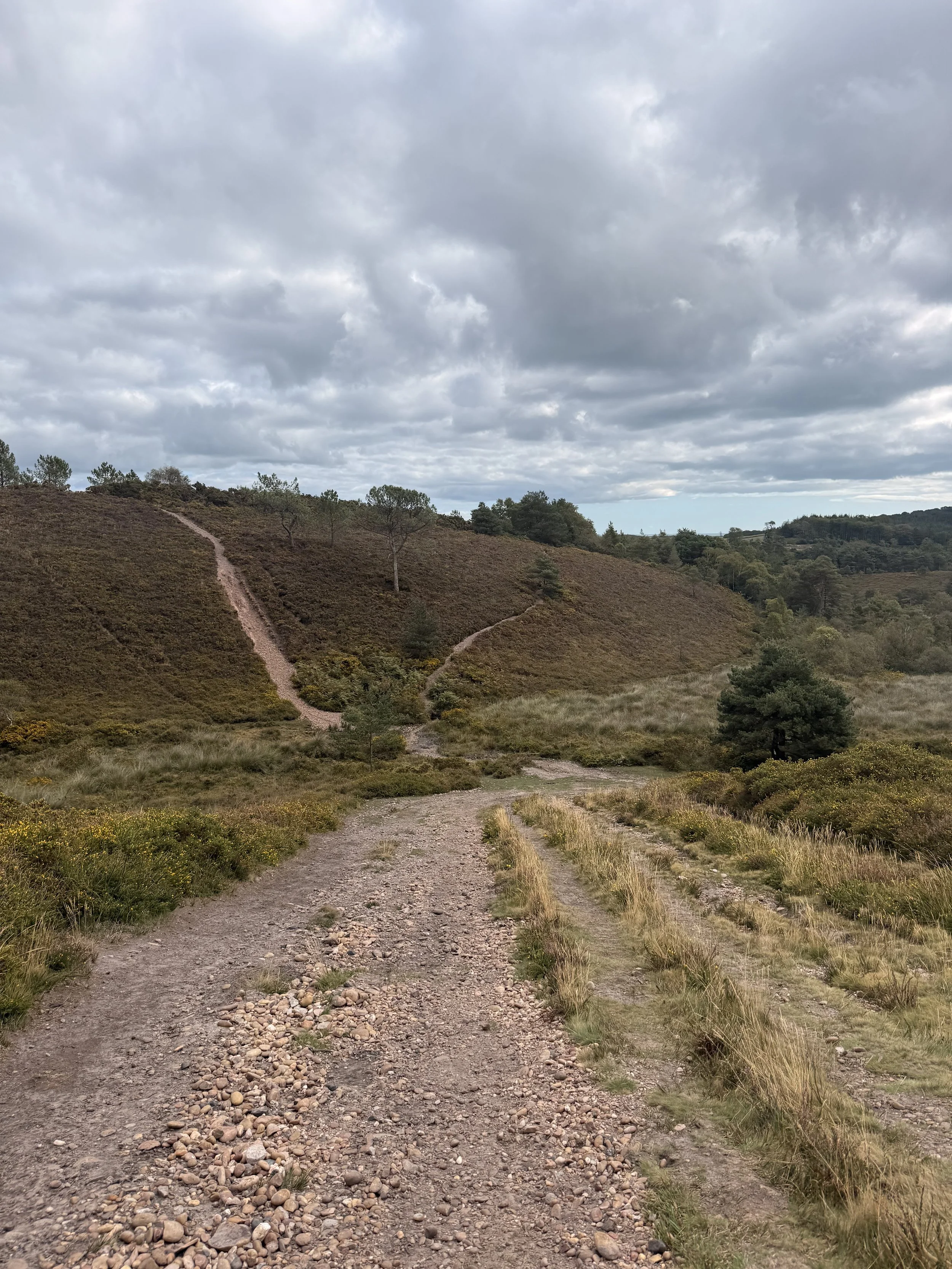
Walking a pebbled track on the common
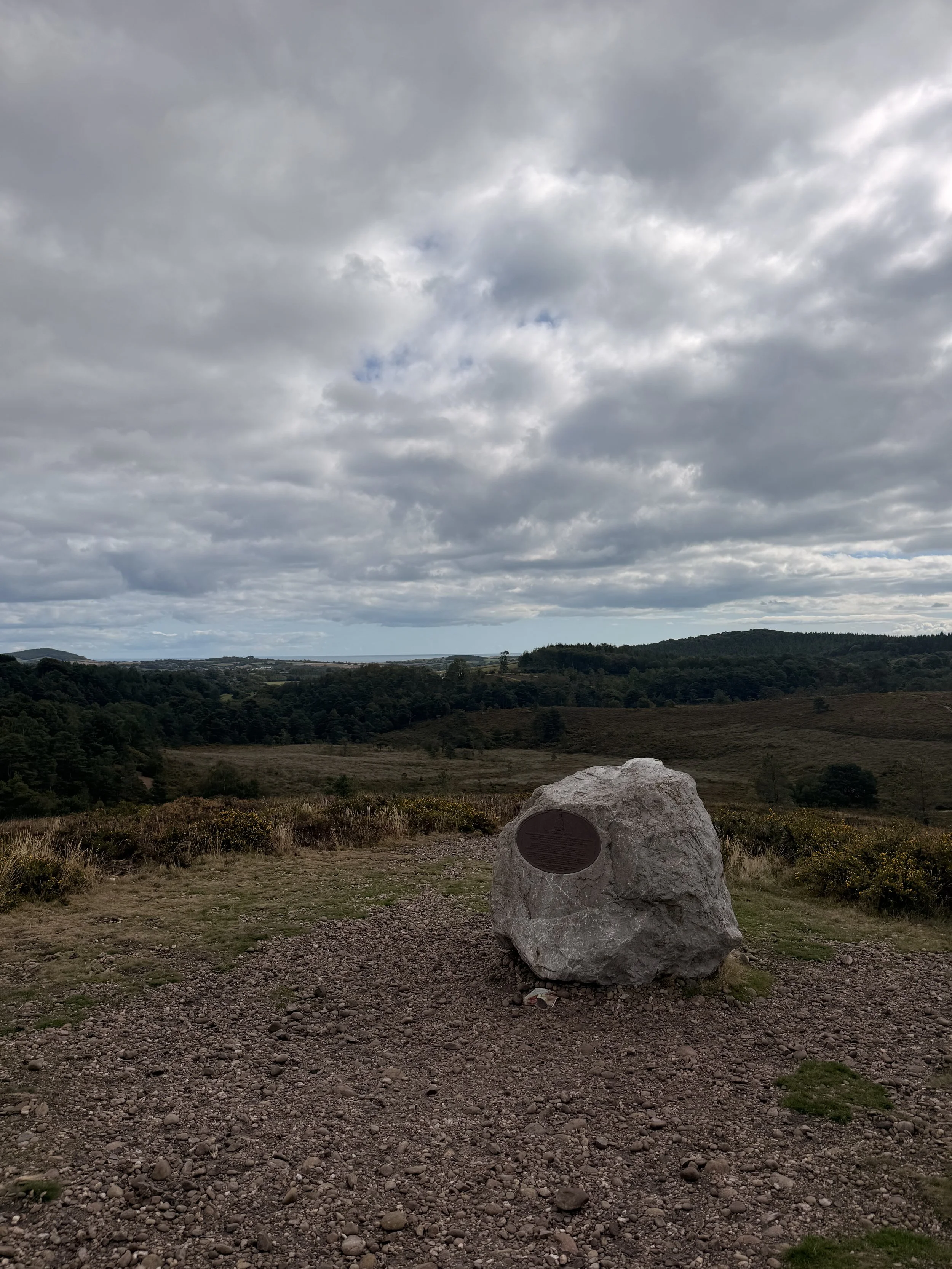
The Gibraltar Stone
From the Four Firs car park, take the gate to the far left (left of the information sign), walking the track directly ahead of you. You should be able to see the beautiful views in the distance of rolling hills and the sea as you continue along this route, ignoring any paths that come away from this main track. You’ll soon be walking up a slight incline, listen out for the scratchy tone of the dartford warbler in this area, I heard one, then saw it perched on top of the yellow gorse as I walked down the hill. Once at the bottom, turn right and walk up the pebbled track, luckily avoiding the steeper hill on the left! At the top of the hill, turn left down a path that takes you to the Gibraltar Stone (a large rock brought over from Gibraltar to commemorate the 350th anniversary of the Royal Marines who train on the common). Here there are panoramic views of the heaths, sea views and East Devon countryside.
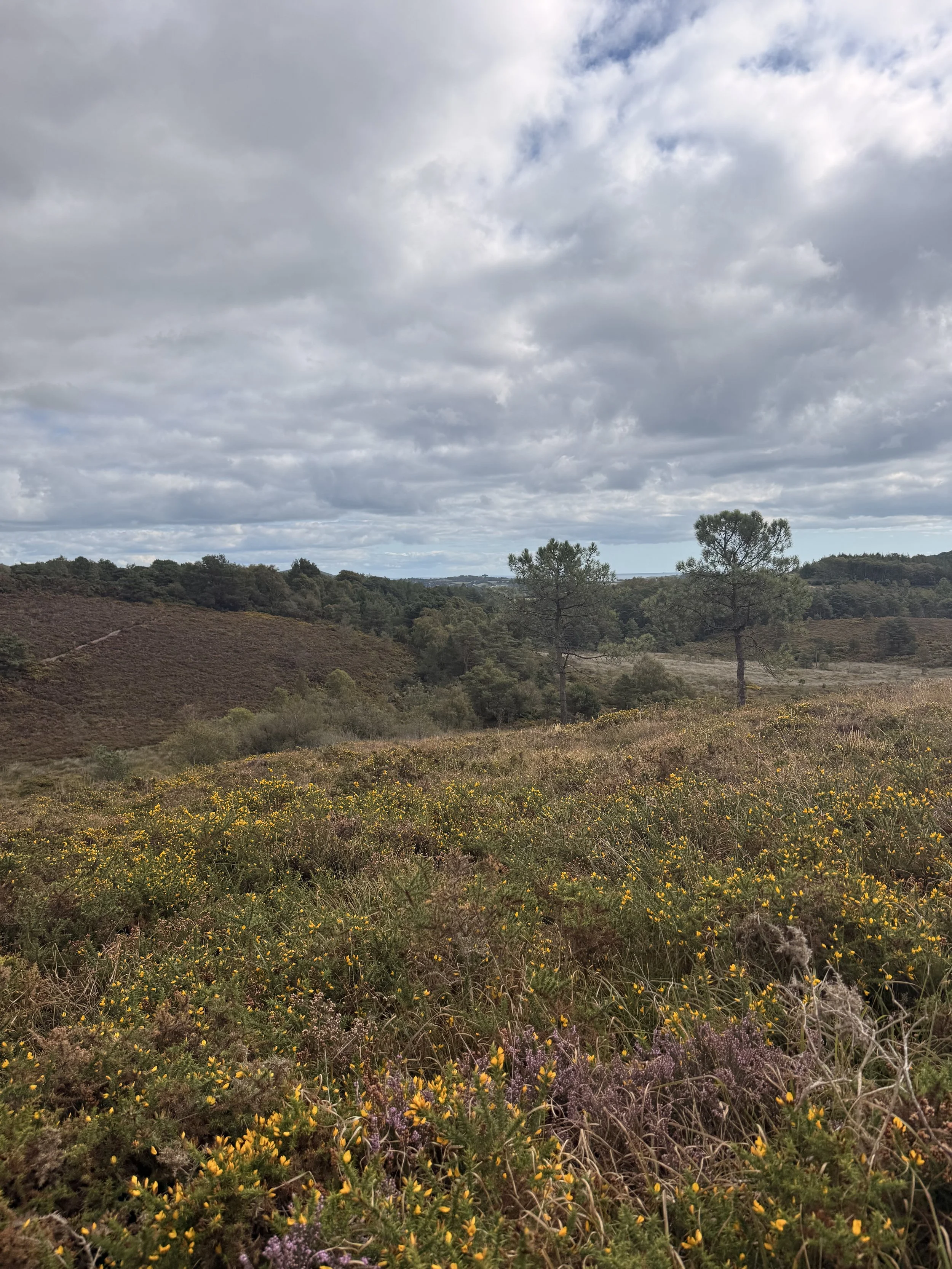
Heather and gorse bringing colour to the heaths
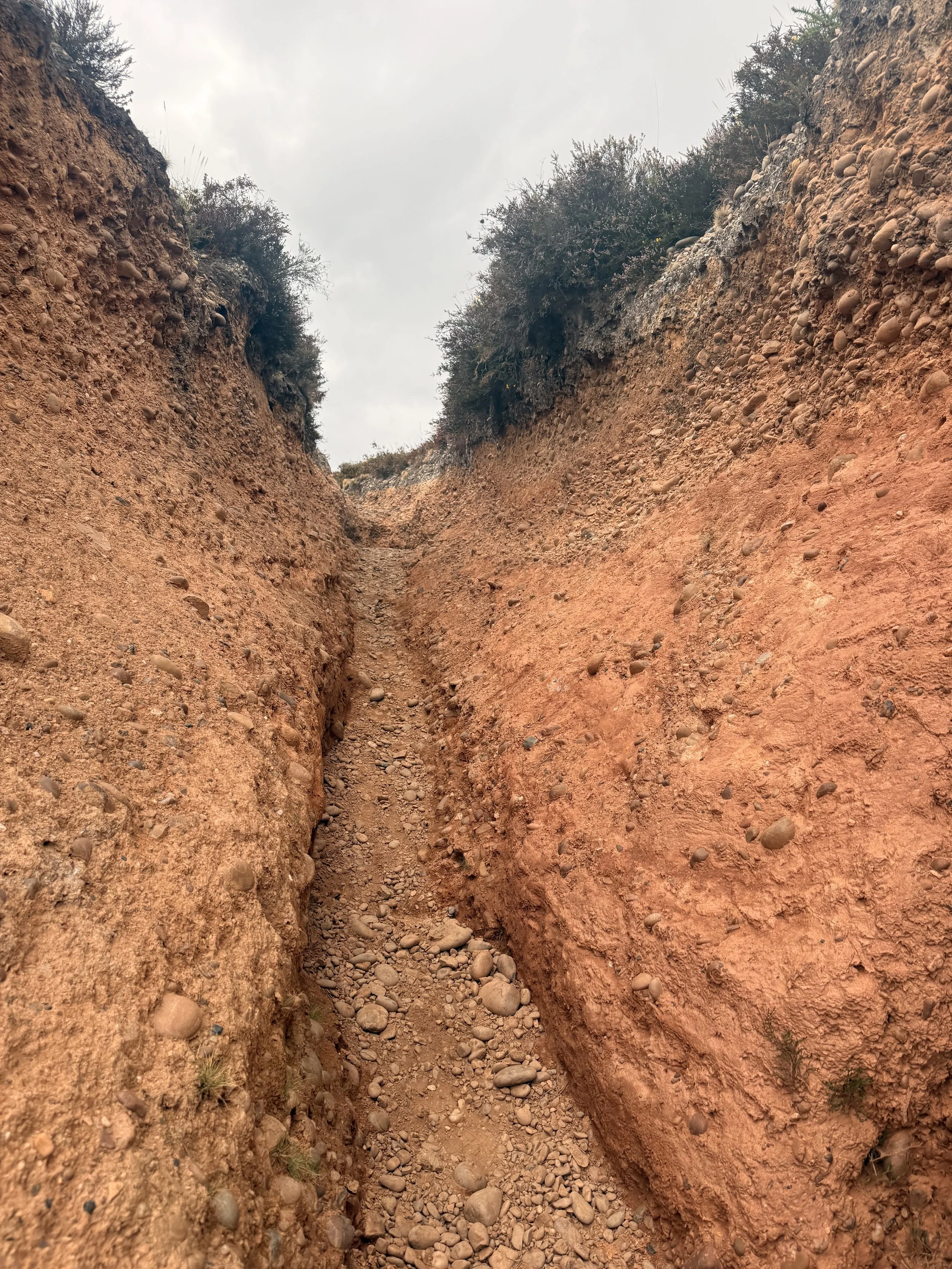
A steep sided gully
I then walked down the hill to the left of the Gibraltar Stone to pass one of the Royal Marines’ training routes. Feel free to take a look at this steep sided gully at the bottom of the hill, to the left, then turn right and continue along the track until you get to a bend, from here, take the trodden path to the right which will join up to the bottom of the Gibraltar Stone track. (Alternatively, you can just walk down the track on the right of the Gibraltar Stone if you don't want the detour to see the high sided gully). Turn left and walk the track towards trees in the distance. At the top you’ll come to a clearing with a beautiful pine tree standing alone, look back and enjoy the views before turning left down another hill. You’ll get a good view of Peak Hill in the distance as you walk down the slope, meeting a stream, used as a watering hole by the cattle and ponies that graze here. Carefully pass over the water via the stones and walk up the hill, keeping left as you then pass an area of trees where cattle are normally resting.
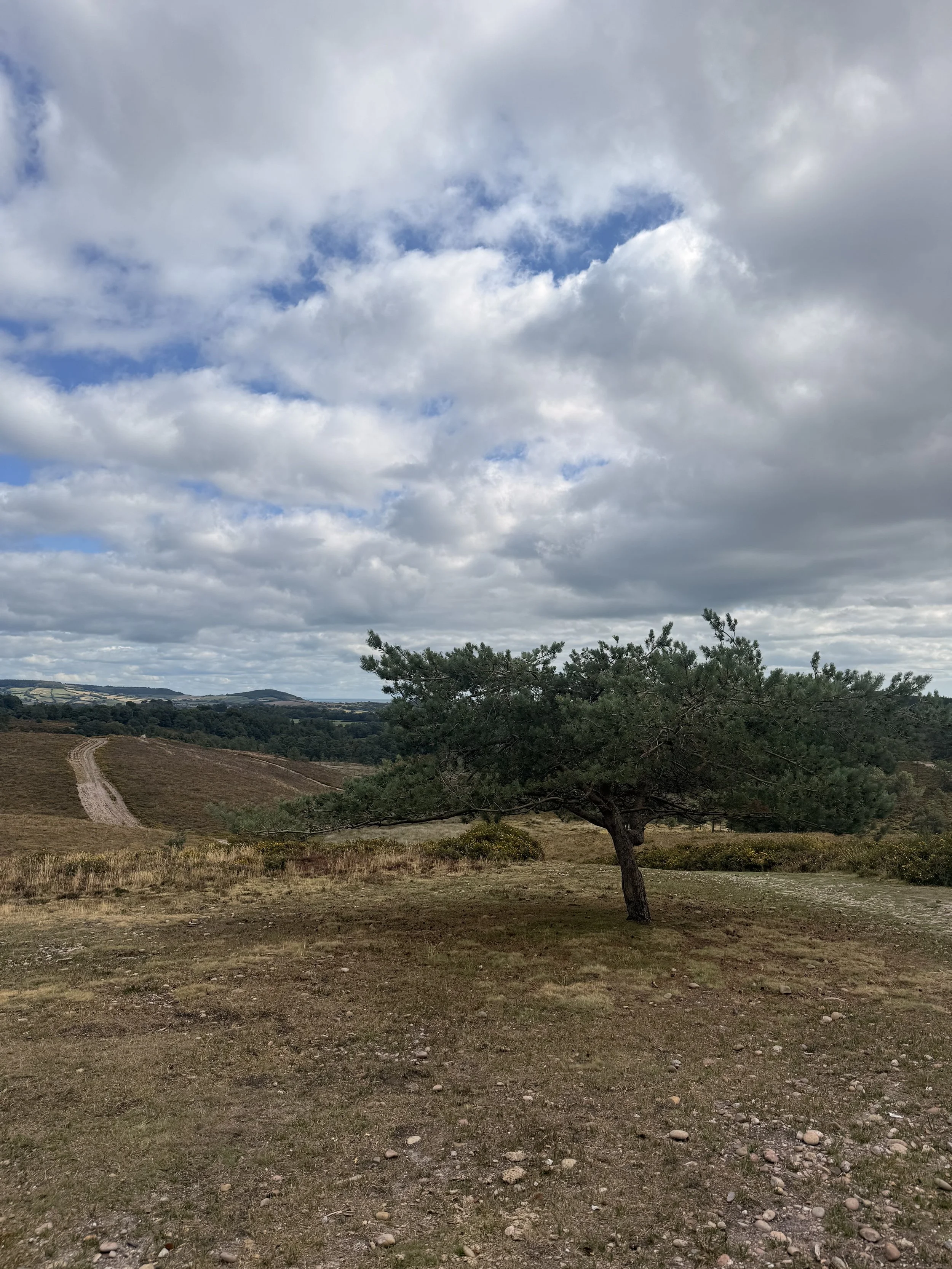
The lonesome pine
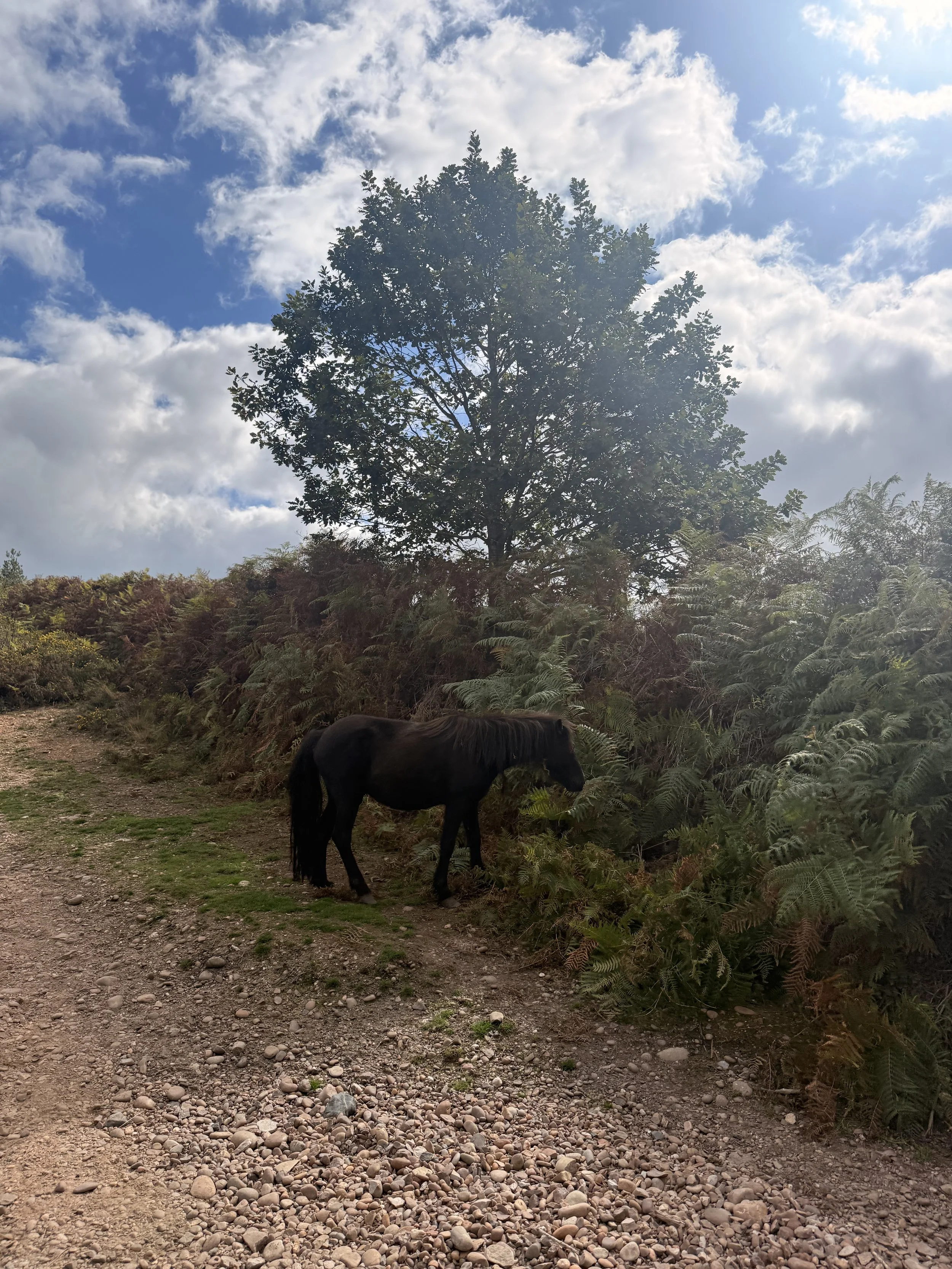
Ponies graze in this area at certain times of the year
Continue on straight ahead, ignoring any paths that come away from the main track. Eventually you’ll walk down a hill, then up a slope with a path to your right. Ignore this path (though it is a great place for den building), and carry on along the main path until it takes you into the woods. Here I heard so many birds calling and singing; great spotted woodpecker, long tailed tits, coal tits, blackbirds and goldcrests. This path will soon arrive at a stream, carefully cross over it (there is a little bridge made out of logs), then take the main track with the wire fence on your left. Turn right along this route, ignoring a gate on your left, then turning left at a bend to walk up a hill. Here it can get quite muddy from the trickling stream that runs down the hill. Take a track between two trees and turn left to join a grass path that opens up onto the heaths. Keep to this main path which will soon take you under tree coverage as you go down a hill, passing a beautiful tree with large moss covered roots on your left.
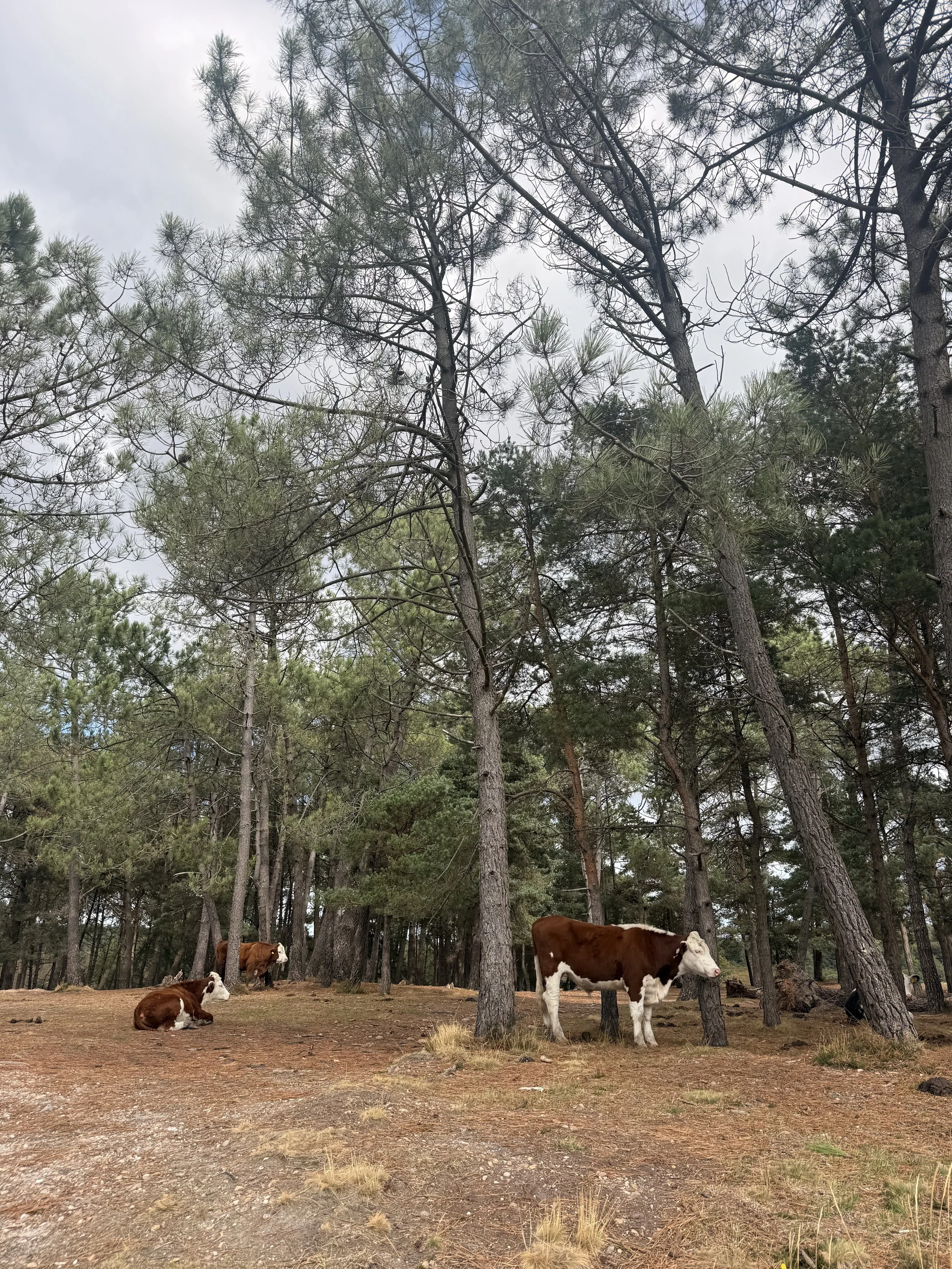
Cattle resting on the heaths
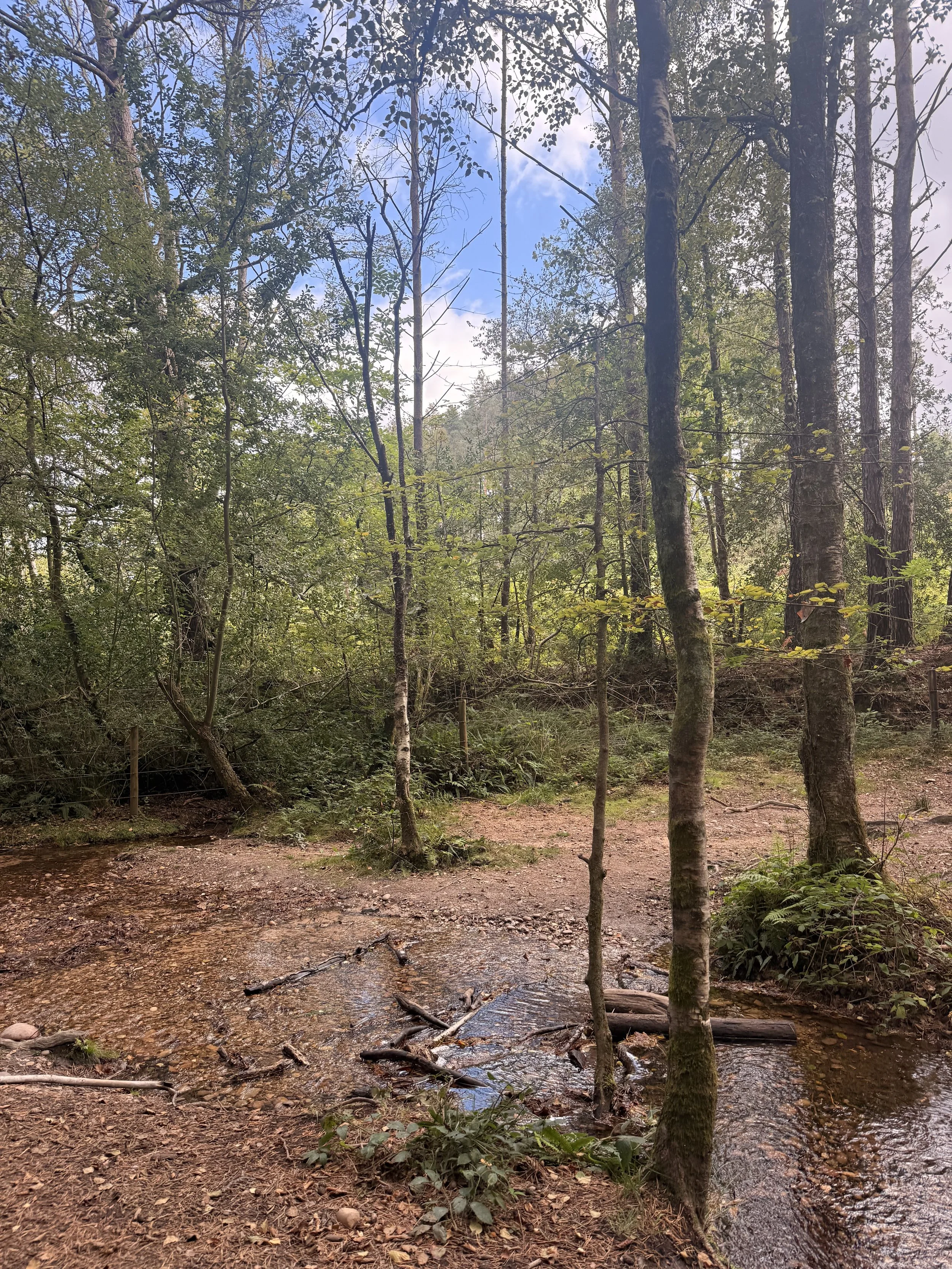
The stream to cross over
This path will then open up again onto the heaths, I heard goldcrests to the right of this track, flitting about in the pine trees. When you reach a gate, pass through it where you’ll get a glimpse of Blackhill Quarry through the trees on your right. It’s no longer a working quarry and is currently under restoration to encourage wildlife and nature back to it. Once at a crossroads (with a road on your left behind a metal barrier) turn right down the hill with the quarry now on your left. In the distance see if you can spot the Gibraltar Stone on your right. You’ll soon pass a board on your left, with more information about the work being undertaken to rewild the quarry site, as well as how successful it’s already been for wildlife. On the September day that I walked this route, I saw coots and tufted ducks on the water, as well as a cormorant perched on the old tree branches on an island on the water.
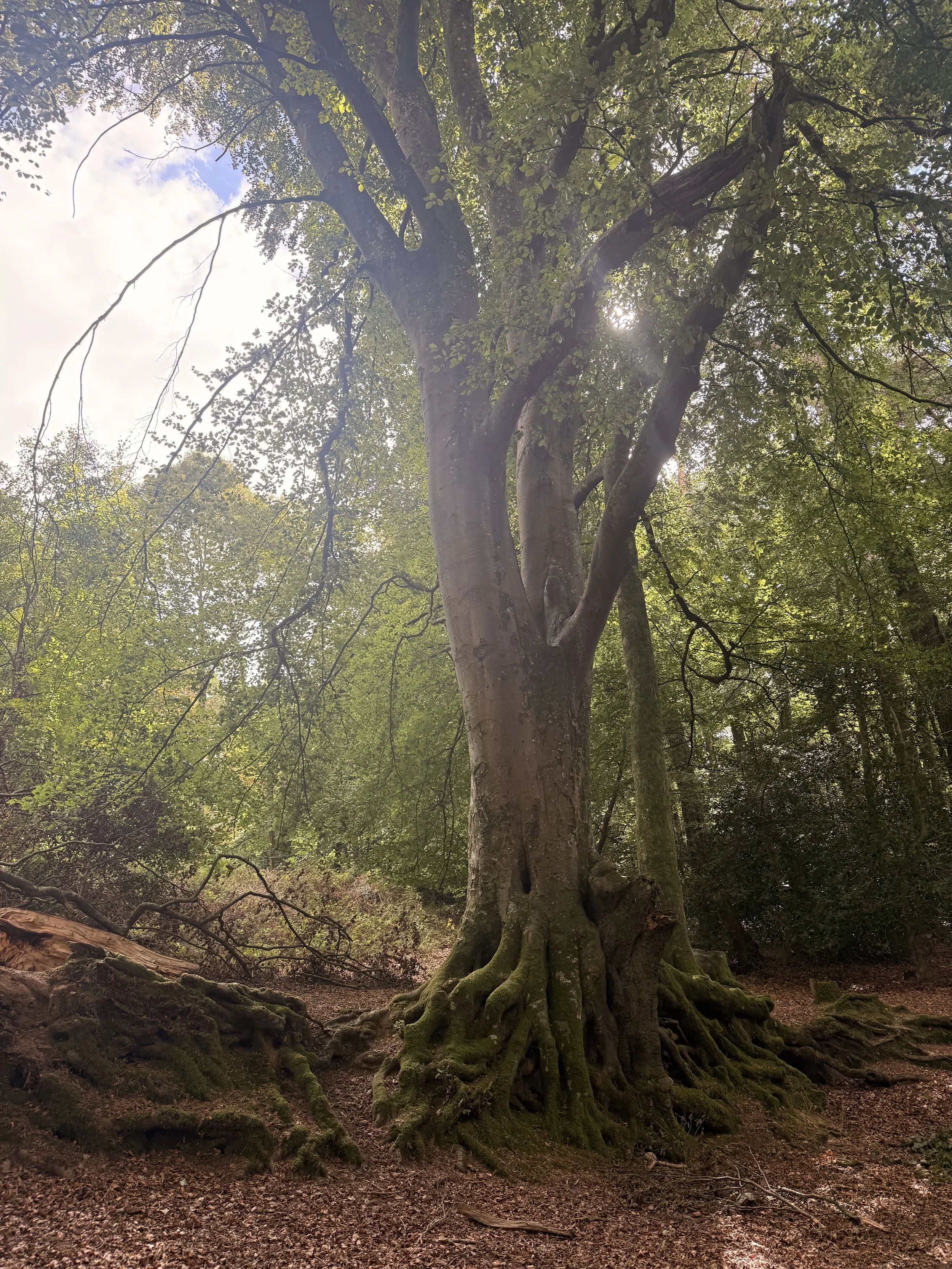
A beautiful moss covered tree
The walk alongside Blackhill Quarry
Once passed through the gate, continue on the track straight ahead of you, with the quarry still on you left, now behind some trees. This track will soon lead you up the last steep hill of the walk where you’ll see a bench at the top. Turn left before the bench walking with the trees on your right. When you spot a public bridleway sign through a track between the trees, turn right and walk down this route. You’ll get a good view of the sea and Otterton village on your right, as you follow this wide path back down towards the car park. I heard dartford warblers again in this area, as well as goldfinches flying over as I passed through a gate, arriving back at Four Firs Car Park. If you enjoyed this walk, I have.a few other walks on here that cover walks in this area of the Pebblebed Heaths, great for families, dog walkers and nature lovers.